![[{[item.product.name]}]]([{[item.product.photo.url]}] 75w)
For free delivery are missing -,--
Order Summary
Sum 0,00 £
Price includes discounts
100 g Gold Bars
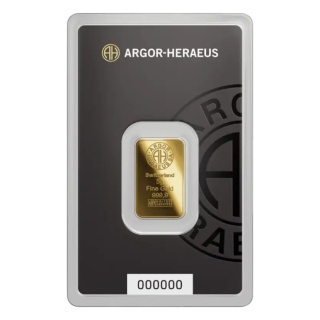
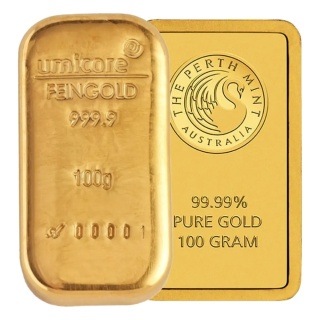
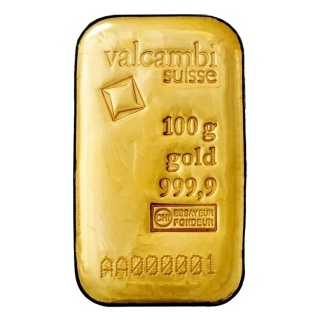
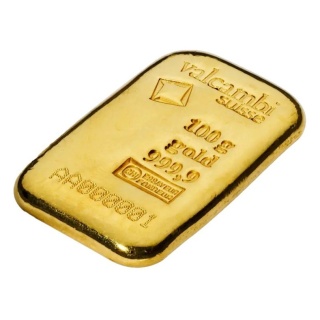
Number of products: 13A 100 g gold bar is the point where the format changes. Up to this weight almost every refinery presses its bars from a strip of metal; above it, almost every refinery pours them into a mould. At 100 g you can still buy both, and the two look nothing alike: the minted Argor-Heraeus bar measures 49.7 × 28.5 × 3.9 mm, while the cast bar of exactly the same weight is 45.0 × 24.0 × 5.6 mm — shorter, narrower and about 40 per cent thicker.
This category lists 100 g bars from the refineries we stock, in both forms, each with the assay documentation issued by its producer.
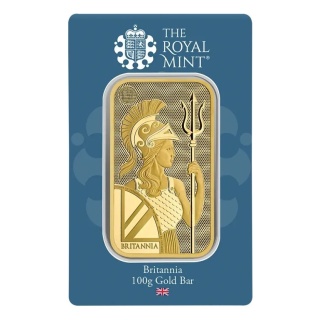
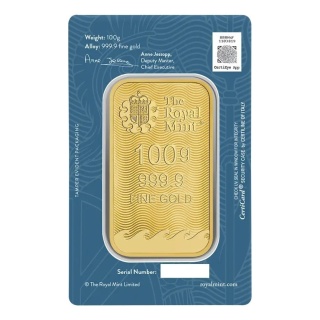
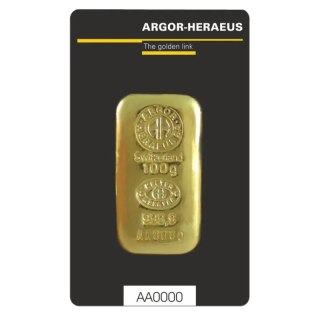
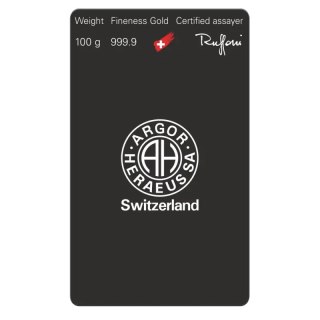
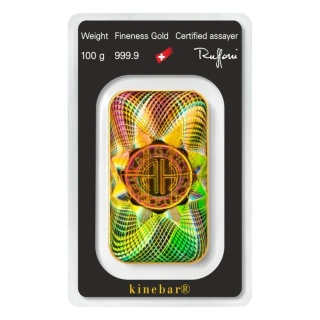
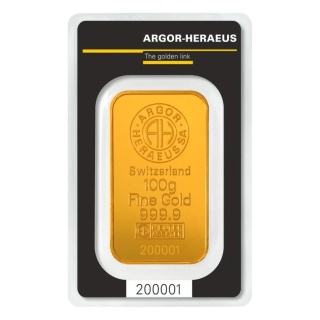
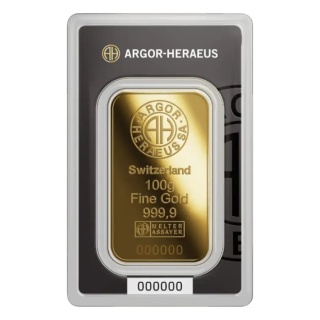
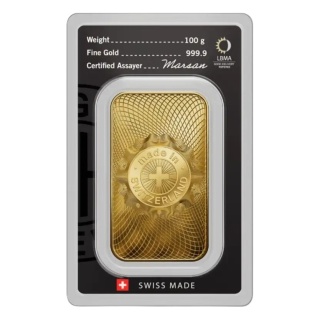
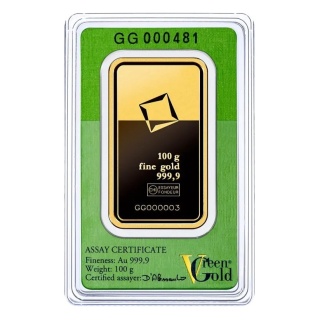
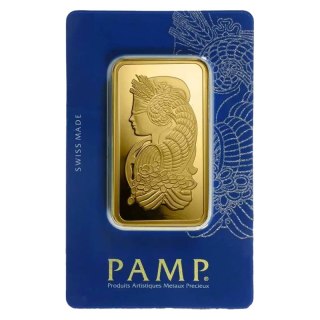
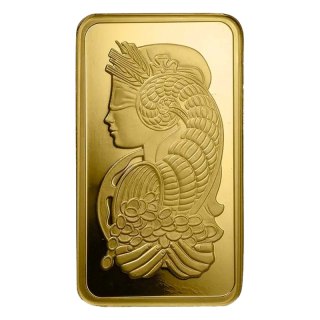
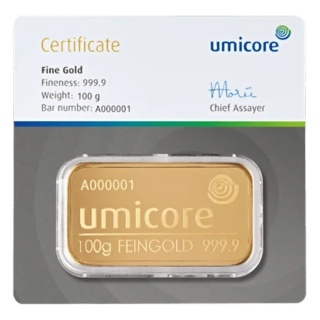
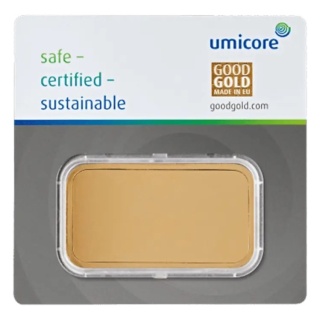
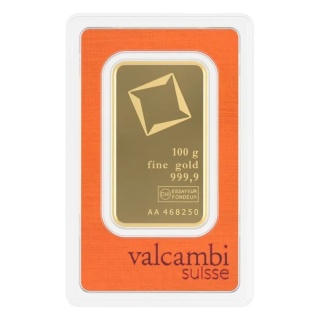
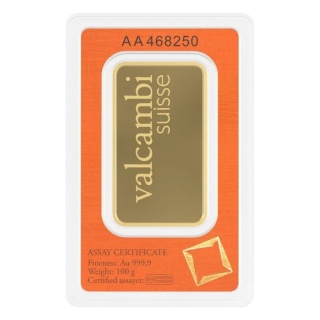
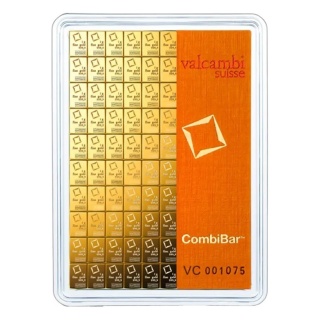
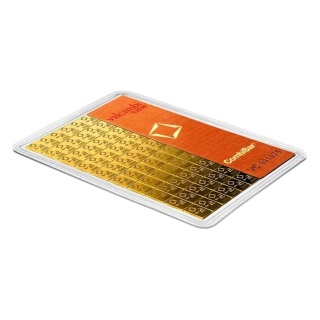
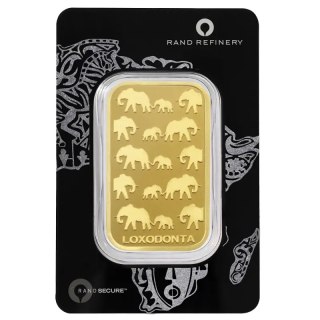
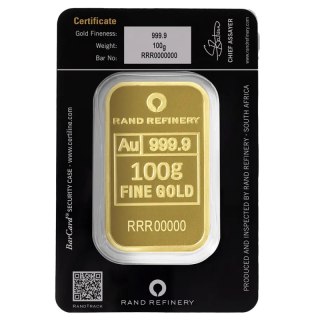
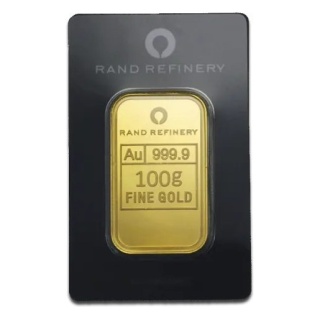
How big a 100 g gold bar actually is
The table below gives published producer specifications; not every refinery in it has stock on this page at any given moment. Gold is dense enough that 100 g of it is smaller than most people expect — around half the length of a payment card and about four millimetres thick, though the blister it ships in is card-sized.
| Refiner or standard | Dimensions | Form | Packaging |
|---|---|---|---|
| Argor-Heraeus | 49.7 × 28.5 × 3.9 mm | minted | blister 85 × 55 mm + assay card |
| Argor-Heraeus | 45.0 × 24.0 × 5.6 mm | cast | supplied loose |
| Umicore | 55 × 31 × approx. 3.2 mm | minted | sealed blister with certificate |
| Umicore | top face 40 × 20 mm, approx. 6.0 mm thick | cast | supplied loose |
| Metalor | 27.5 × 47.5 mm | minted | blister, six-digit serial, DataMatrix code |
| Royal Mint | 55.15 × 32 mm | minted | blister with unique serial number |
Metalor and the Royal Mint publish the face dimensions but not the thickness. PAMP does not publish a specification table at all, so we do not quote figures for the Fortuna bar; what the producer does state is that every one ships in a sealed CertiPAMP assay card carrying a certificate number.
Minted or cast — what the difference means in the hand
A minted bar is cut from rolled strip and struck, so its edges are square, its faces are mirror-flat and the design is crisp. A cast bar is poured into a mould and cooled, which leaves a rounded, slightly uneven surface and, on many bars, visible flow marks. Neither form is purer than the other — both are 999.9 here. What differs is finish, packaging and, usually, price: casting is the cheaper process, so cast bars normally carry the lower premium over spot.
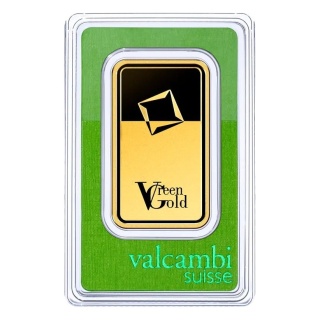
The practical consequence is that a minted 100 g bar arrives sealed in a card-format blister you are not meant to open, while a cast bar comes loose and can be handled directly.
Refiners in this weight
The listing draws on Argor-Heraeus, Valcambi, PAMP, C.Hafner, Umicore, Perth Mint, the Royal Mint, Rand Refinery, Münze Österreich and Istanbul Gold Refinery. Valcambi, PAMP, Argor-Heraeus, C.Hafner, Umicore, the Perth Mint, Rand Refinery and Istanbul Gold Refinery all appear on the LBMA Good Delivery list for gold. The Royal Mint and Münze Österreich do not appear on it — they are mints rather than accredited refineries, and Münze Österreich states outright that its bars are produced by Argor-Heraeus or PAMP. The accreditation belongs to the refinery and its assay process, not to an individual bar, and the LBMA issues no certificate to a retail buyer.
The practical consequence of that last point: comparing an Austrian Mint 100 g bar with an Argor-Heraeus one often means comparing two brandings of the same production line. Argor-Heraeus is also the only refinery licensed to apply the KINEGRAM hologram, which is what the Kinebar range is.
What you actually pay
The price of any bar is the gold price for its weight plus the refinery's premium plus the dealer's margin. At 100 g the premium is a small fraction of the total, which is why this weight and the ones above it are the cheapest way to hold gold per gram — the opposite of the 1 g and 2 g formats, where fabrication cost dominates. Live quotes update with the market on our gold price page.
Tax status
Gold bullion is exempt from VAT throughout the European Union under Council Directive 2006/112/EC, Articles 344–346. The exemption covers bars of a fineness of at least 995 thousandths and gold coins of at least 900 thousandths minted after 1800 that are, or have been, legal tender in their country of origin. GoldInvest24 is operated by a Polish company and applies that exemption, so the price shown is the price you pay. This describes how we invoice and is not tax advice — rules in your own country may differ.
Questions buyers ask about this weight
How much is a 100 g gold bar worth?
Take the gold price per gram and multiply by 100, then add the premium charged on that particular bar. The metal value moves with the market throughout the trading day, so the figure on the product page is the one that counts at the moment you order.
How big is a 100 g gold bar?
Around half the length of a payment card and a few millimetres thick. The minted Argor-Heraeus bar is 49.7 × 28.5 × 3.9 mm; the Umicore minted bar is 55 × 31 mm and roughly 3.2 mm thick; the Royal Mint Britannia bar measures 55.15 × 32 mm.
Is a 100 g bar minted or cast?
Both exist. 100 g is the last weight where refineries routinely offer the pressed version alongside the poured one. Above 100 g the market is effectively cast only; below it minted dominates, with cast exceptions from one ounce upwards at the Perth Mint.
Does a 100 g bar come with a certificate?
Minted bars ship sealed in a blister that doubles as the assay card, carrying the weight, the fineness and a serial number. Cast bars are supplied loose with their assay documentation. Breaking the seal on a minted bar does not affect the metal, but it does remove the packaging a buyer will look for later.
Can I sell a 100 g bar back to you?
Yes. We buy gold bars back, and the rate is quoted against the current market price rather than the price you originally paid. See the buyback page for how the quote is worked out.
Other gold bar weights
0.5 g · 1 g · 2 g · 2.5 g · 5 g · 10 g · 20 g · 1 oz · 50 g · 250 g · 500 g · 1 kg
All weights are listed together on the gold bars page. For coin formats in the same metal, see gold coins.
Popular in this category
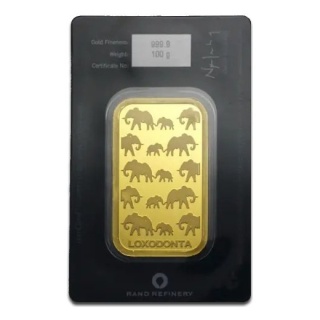
100 g African Elephant Gold Bar | Rand Refinery · 100 g Britannia Gold Bar | Royal Mint · 100 g Gold Bar | Argor-Heraeus | Cast