![[{[item.product.name]}]]([{[item.product.photo.url]}] 75w)
For free delivery are missing -,--
Order Summary
Sum 0,00 £
Price includes discounts

5 g Gold Bars
Number of products: 21At 5 g a gold bar stops being a token and starts being a solid, handleable object: 23.0 × 14.0 × 0.9 mm at Argor-Heraeus, 24 × 14 mm at Umicore, 15.5 × 25.5 mm at Metalor. It is still under a millimetre thick, and still sold sealed in a card.
This is the weight where the premium per gram has fallen noticeably from the 1 g and 2 g formats without the outlay yet becoming substantial — which is why it is one of the most heavily stocked weights in the range.
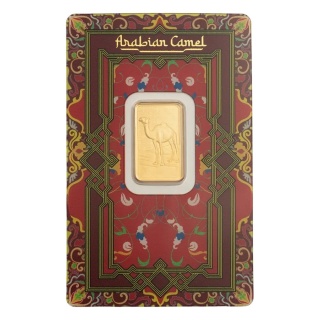
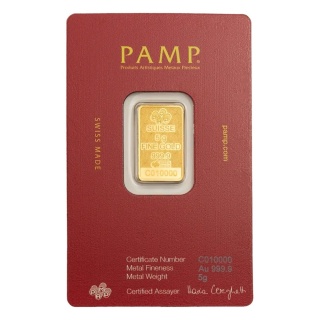
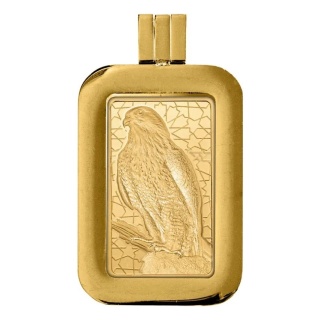
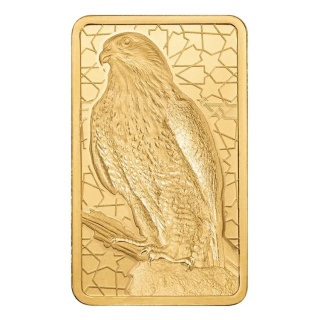
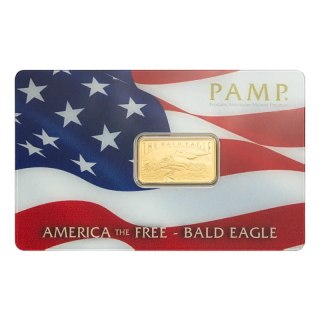
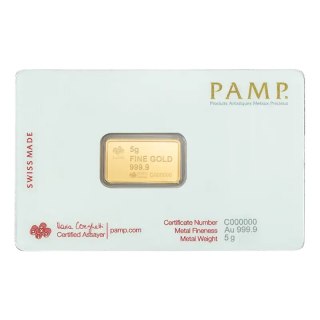
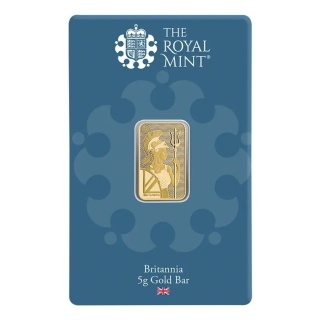
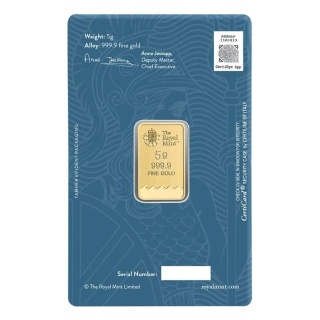
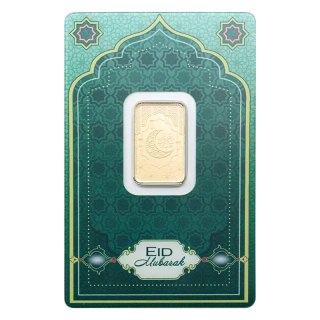
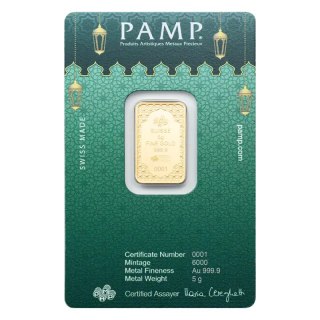
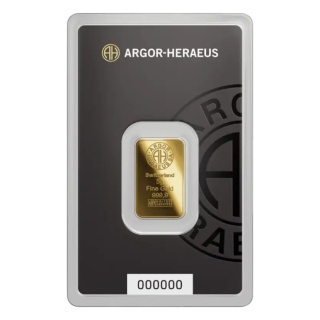
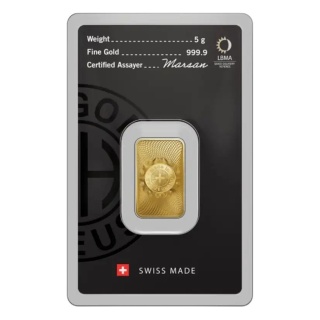
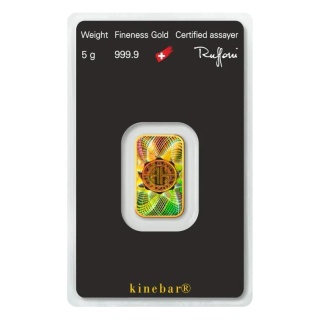
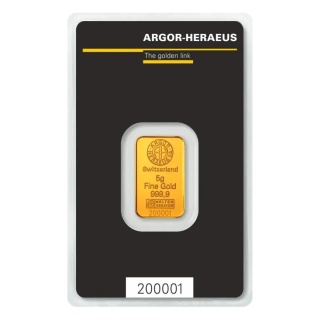
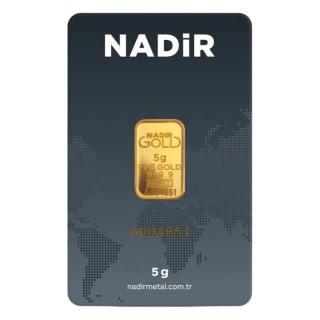
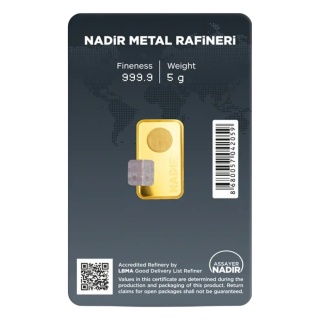
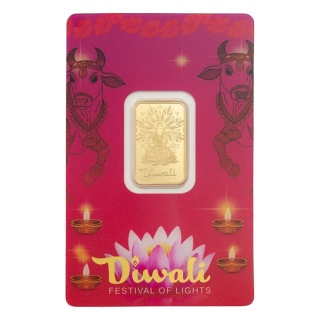
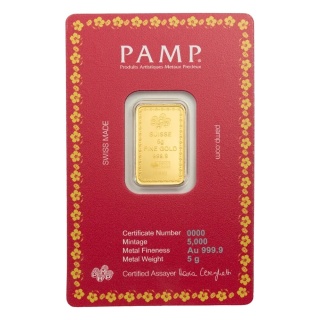
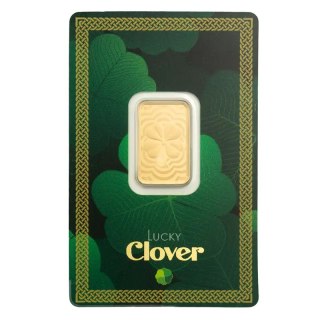
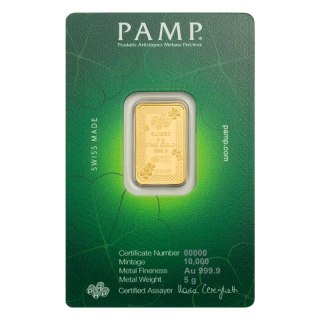
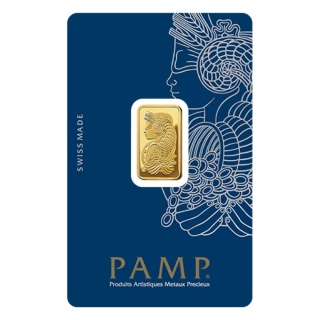
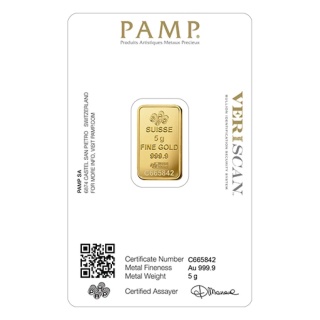
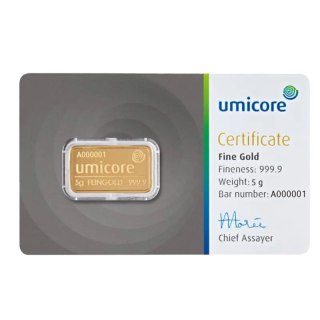
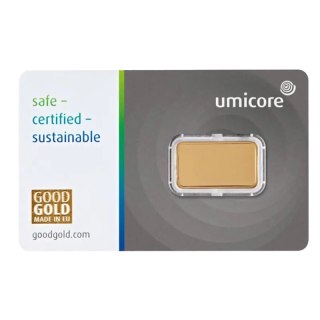
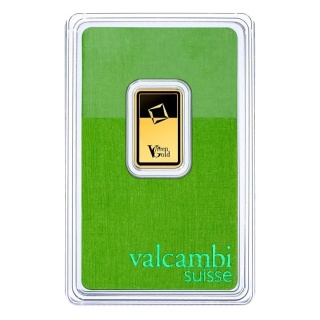
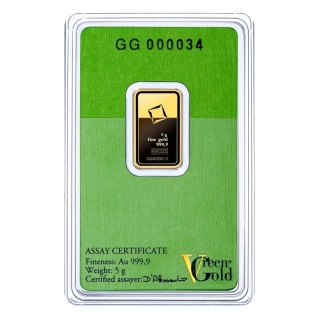
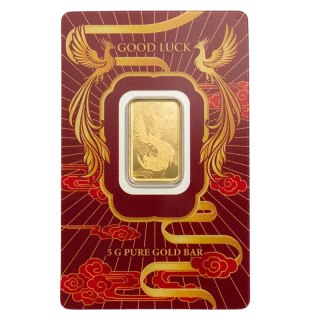
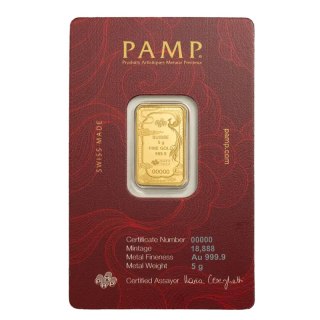
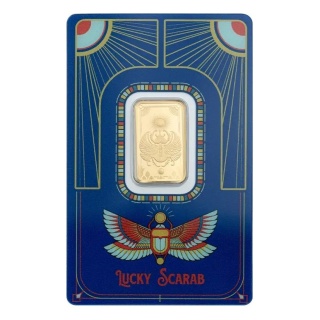
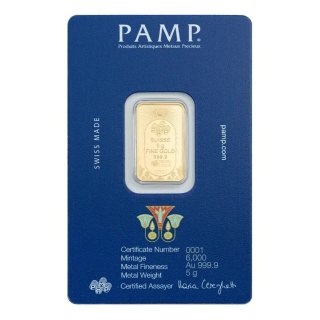
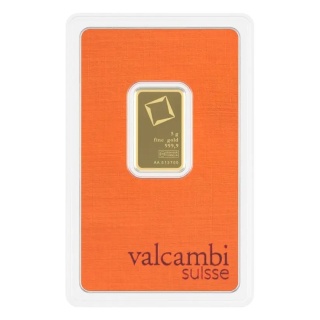
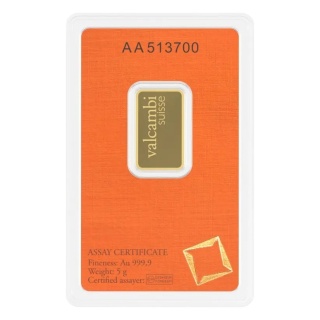
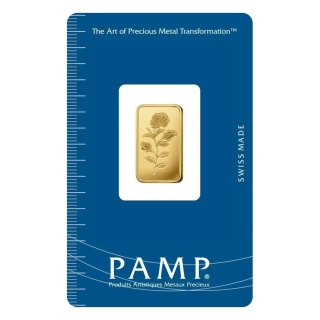
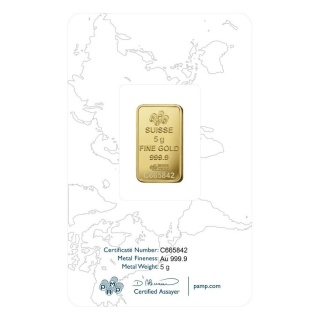
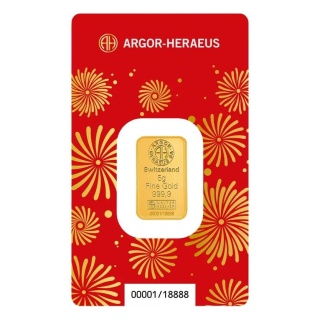
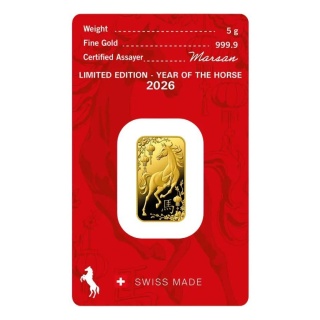
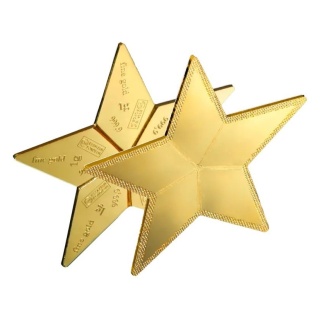
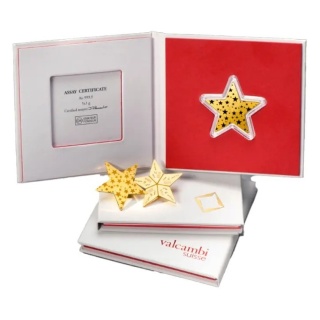


How big a 5 g gold bar actually is
Five grams of gold occupies roughly a quarter of a cubic centimetre. Every refinery solves the same problem differently — some go wider, some go longer — but all stay under a millimetre of thickness. The table gives published producer specifications, not current stock.
| Refiner or standard | Dimensions | Form | Packaging |
|---|---|---|---|
| Argor-Heraeus | 23.0 × 14.0 × 0.9 mm | minted | blister + assay card |
| Umicore | 24 × 14 × approx. 0.9 mm | minted | sealed blister |
| Metalor | 15.5 × 25.5 mm | minted | blister, six-digit serial number |
Argor-Heraeus and Umicore land within a millimetre of each other on the face — 23.0 × 14.0 mm against 24 × 14 mm — and both stop at 0.9 mm thick, which is the constraint that really shapes a bar this light.
Where 5 g sits in the range
The premium curve across the bar range is steep at the bottom and flat at the top. Between 1 g and 5 g it falls sharply, because the same fabrication work is now spread over five times the metal. Between 50 g and 1 kg it barely moves. Five grams is on the steep part but past the worst of it.
In practice buyers use this weight for two things: adding to a holding gradually rather than committing to a one-ounce bar in one go, and holding gold in units small enough to sell piece by piece.
Refiners in this weight
The listing covers Valcambi, PAMP, Argor-Heraeus, C.Hafner, Umicore, Perth Mint, the Royal Mint and Münze Österreich, along with the Argor-Heraeus Kinebar. Münze Österreich does not run its own bar line: the Austrian Mint states that its bars are produced by Argor-Heraeus or PAMP. It publishes no dimensions of its own.
Valcambi, PAMP, Argor-Heraeus, C.Hafner, Umicore and the Perth Mint all appear on the LBMA Good Delivery list for gold. The Royal Mint does not appear on it — it is a mint rather than an accredited refinery. The accreditation belongs to the refinery and its assay process, not to an individual bar, and the LBMA issues no certificate to a retail buyer.
What you actually pay
Metal value for 5 g at the current market price, plus the refinery premium, plus our margin. The metal component moves continuously during trading hours; the premium does not. Live figures are on our gold price page.
Tax status
Gold bullion is exempt from VAT throughout the European Union under Council Directive 2006/112/EC, Articles 344–346. The exemption covers bars of a fineness of at least 995 thousandths and gold coins of at least 900 thousandths minted after 1800 that are, or have been, legal tender in their country of origin. GoldInvest24 is operated by a Polish company and applies that exemption, so the price shown is the price you pay. This describes how we invoice and is not tax advice — rules in your own country may differ.
Questions buyers ask about this weight
How much is a 5 g gold bar worth?
Five times the gold price per gram, plus the premium on that bar. The premium is a smaller share of the total than on a 1 g or 2 g bar, and a larger share than on a 100 g bar.
How big is a 5 g gold bar?
23.0 × 14.0 × 0.9 mm at Argor-Heraeus, 24 × 14 mm and about 0.9 mm thick at Umicore, 15.5 × 25.5 mm at Metalor. All three are under a millimetre thick.
Is a 5 g bar minted or cast?
Minted. Casting only becomes standard from 50 g upwards, and at this weight every refinery presses the bar from rolled strip.
What is in the packaging?
The bar is sealed into a blister that also serves as the assay card. It states the weight and the fineness, and on most brands carries a serial number that matches the bar.
Do you buy 5 g bars back?
Yes, at a rate quoted against the current market price. 5 g is one of the deepest listings we hold, which keeps the resale spread on it tight. The buyback page explains how.
Other gold bar weights
0.5 g · 1 g · 2 g · 2.5 g · 10 g · 20 g · 1 oz · 50 g · 100 g · 250 g · 500 g · 1 kg
All weights are listed together on the gold bars page. For coin formats in the same metal, see gold coins.
Popular in this category
5 g Year of the Horse Gold Bar | Argor-Heraeus | 2026 · 5 g Gold Bar | Argor-Heraeus · 5 g Gold Bar | PAMP Fortuna