1 oz Maple Leaf 2026 — Canadian bullion gold coin from Royal Canadian Mint with Bullion DNA system and Charles III portrait
Maple Leaf 1 oz with 2026 vintage is the flagship bullion coin of Royal Canadian Mint with 999.9/1000 fineness and 31.103 g net gold. Diameter 30 mm, thickness 2.87 mm, face value 50 CAD — full legal tender status in Canada.
The 2026 vintage is the third production year with Charles III portrait by Steve Rosati (approved 2024), reverse maple leaf by Walter Ott from 1979. The coin price is linked to the current LBMA precious metals prices.
Technical specifications 1 oz Maple Leaf 2026
| Parameter |
Value |
| Gold weight (Au) |
31.103 g (1.000 troy oz) |
| Fineness |
999.9/1000 (.9999, 24 karat) |
| Diameter |
30.0 mm |
| Thickness |
2.87 mm |
| Face value |
50 CAD (legal tender Canada) |
| Manufacturer |
Royal Canadian Mint (Ottawa 1908, Winnipeg) |
| Obverse |
Charles III — Steve Rosati (2024) |
| Reverse |
Maple leaf — Walter Ott (1979) |
| Security features |
Micro-engraved leaf with year (Bullion DNA, 2013+) + radial lines |
| Verification |
Bullion DNA Reader app (iOS/Android) |
| Accreditation |
LBMA Good Delivery since 1980 |
| Packaging |
Individual capsule |
| VAT |
Exempt (Council Directive 2006/112/EC) |
Why 1 oz Maple Leaf 2026?
- 31.103 g of 999.9/1000 fineness gold — first classic .9999 bullion coin in the world (since 1982)
- Royal Canadian Mint — Canada's national mint established 1908 (Ottawa and Winnipeg), LBMA accreditation since 1980
- Bullion DNA — micro-engraved maple leaf with year visible under 10× loupe (since 2013) plus Bullion DNA Reader mobile app
- Obverse Charles III by Steve Rosati (2026 vintage is third production year with the new monarch)
- Reverse with iconic maple leaf by Walter Ott from 1979 — most recognizable Canadian symbol in numismatics
History of the Maple Leaf series — from 1979 debut to 2026 vintage
Royal Canadian Mint was established on January 2, 1908 as a branch of the British Royal Mint in Ottawa, in response to the need to refine Canadian gold from the Klondike Gold Rush. The mint gained full independence from the British Crown in 1931 (Statute of Westminster). Today Royal Canadian Mint operates as a Crown Corporation controlled by the Canadian federal government, with two locations: Ottawa (numismatics and collector production) and Winnipeg (bullion production).
The 1979 debut of the Gold Maple Leaf was a strategic response to sanctions against South Africa and the suspension of Krugerrand imports to most Western states. The first Maple Leaf issue had 999/1000 fineness (Krugerrand remained at 916.7/1000). In 1982, Royal Canadian Mint — as the first classic bullion mint in the world — raised the fineness to 999.9/1000. This was an industry revolution: the “gold without alloy” motif permanently changed market perception.
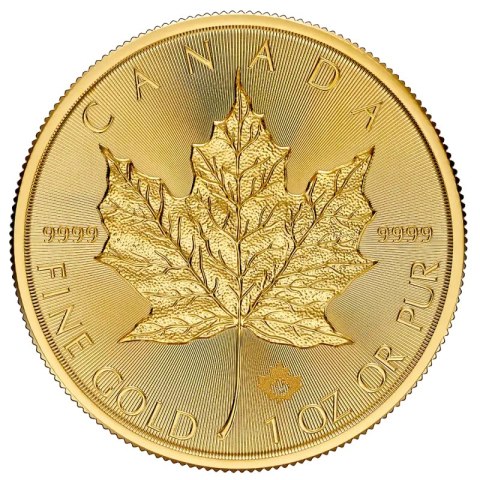
The year 2013 brought the second breakthrough — introduction of Bullion DNA technology. A micro-engraved tiny maple leaf with the year of production is placed within the central main leaf (visible under 10× loupe). Additionally, radial security lines were introduced on both sides of the coin, creating a characteristic “shimmer” light pattern at different viewing angles — an effect difficult to reproduce with conventional counterfeiting techniques.
Royal Canadian Mint also provides the Bullion DNA Reader mobile app (iOS and Android), which allows scanning the unique DataBar code next to the micro-leaf and confirming the coin's authenticity in the Mint's database. This solution distinguishes Maple Leaf in the 1 oz segment — no other classic bullion coin has an equivalent verification ecosystem.
The 2026 vintage is the third production year with the Charles III portrait by Steve Rosati (approved by the monarch in 2024, issued since 2024). The reverse has not changed since 1979 — Walter Ott designed the maple leaf motif, which for 47 years has remained the hallmark of the series and one of the most recognizable Canadian symbols in world numismatics.
Obverse — Charles III portrait by Steve Rosati
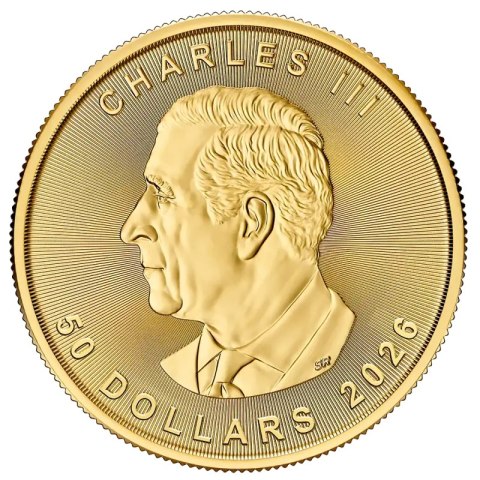
On the obverse of the Maple Leaf 2026 coin is the portrait of King Charles III in right profile, by Canadian sculptor Steve Rosati. The design was officially approved by the monarch in 2024 and introduced into production the same year — the 2026 vintage is the third vintage with this portrait (after 2024 and 2025).
Around the portrait are the inscriptions “CHARLES III” and “CANADA”, as well as the face value “50 DOLLARS” and the year of strike. Steve Rosati is one of the leading engravers of Royal Canadian Mint and has also designed portraits on other Canadian coins. Portrait details are clearly visible even without a loupe — from hairline contours to details of the order on the king's chest.
Reverse — Walter Ott's maple leaf and the Bullion DNA system
The reverse of Maple Leaf depicts a stylized sugar maple leaf (acer saccharum) — the national symbol of Canada, also present on the national flag. The 1979 design by Walter Ott has not undergone any significant changes in 47 years of production — one of the most stable designs in the history of bullion numismatics.
Since 2013 the reverse has been enriched with the full Bullion DNA system: inside the central maple leaf a micro-engraved tiny maple leaf with the two-digit year of production has been struck (e.g., “26” for 2026). The micro-leaf is visible only under a loupe of at least 10× magnification. The second element is radial security lines (radial lines), struck precisely around the entire motif — they create a “shimmer” light effect at different angles.
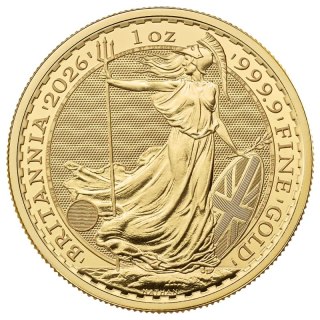
The combination .9999 + Bullion DNA + radial lines + verification app makes Maple Leaf 1 oz the technologically best-secured classic bullion coin in the segment. Vienna Philharmonic 1 oz has micro-engraved “W” (since 2024) without an app. Britannia 1 oz has a 4-tier optical system (since 2021) also without a verification app. Krugerrand 1 oz and American Eagle 1 oz do not have micro-engraving.
What to look for when buying 1 oz Maple Leaf 2026?
First: a coin with 999.9/1000 fineness is physically softer than its 22-karat counterparts (Krugerrand, American Eagle). The 8.33% alloy (silver + copper) used in Crown Gold provides greater scratch resistance. Maple Leaf requires storage in the factory capsule or blister of Royal Canadian Mint — removing it increases the risk of micro-damage and fingerprints, which may lower the resale price.
Second: the 2026 vintage does not carry a collector markup relative to newer Charles III vintages. The 2024 vintage (first with the new monarch) typically had a higher collector margin over spot, the 2025 vintage — lower, the 2026 vintage — standard market markup over spot without additional markup. Vintages with the portrait of Queen Elizabeth II (1979-2023) retain value similar to the current vintage, with minor variations.
Third: after purchase, it is worth scanning the DataBar on the coin with the Bullion DNA Reader app (free, iOS and Android). The scan confirms the coin's authenticity in the Royal Canadian Mint database and can be useful in case of resale — it increases buyer trust and reduces the need for additional electronic or chemical verification.
Fourth: visual verification should cover the micro-leaf with the year (requires 10× loupe), radial lines around the motif (visible to the naked eye under appropriate light angle) and edge sharpness of the coin. All three elements occur together only on original Maple Leafs from the 2013 vintage onward.
Why GoldInvest24?
- Manufacturers with LBMA Good Delivery accreditation — Royal Canadian Mint (since 1980), Münze Österreich, Royal Mint, Rand Refinery, PAMP Suisse
- Full range of formats — from 1 g to 1 kg in bars and coins from 1/20 oz to 1 oz in multiple series
- Product descriptions in three language versions (PL/DE/EN) with concrete technical specifications and historical data
- Access to current precious metals prices on LBMA updated in real time
- Portfolio supplementation with categories gold bullion coins, gold bullion bars, silver bullion coins and silver bullion bars
Comparison of 5 coins and bars from the 1 oz package
| Feature |
Maple Leaf |
Philharmonic |
Britannia |
Krugerrand |
PAMP Fortuna |
| Manufacturer |
Royal Canadian Mint |
Münze Österreich |
Royal Mint |
Rand Refinery |
PAMP Suisse |
| Fineness |
999.9 |
999.9 |
999.9 |
916.7 (22 kt) |
999.9 |
| Diameter |
30.0 mm |
37.0 mm |
32.69 mm |
32.77 mm |
24×41 mm |
| Accreditation |
LBMA since 1980 |
LBMA since 2008 |
LBMA since 1750, CGT-free UK |
LBMA since 1965 |
LBMA since 1986 |
| Security |
Bullion DNA + app |
Micro-“W” since 2024 |
4 optical tiers |
none (Crown Gold) |
CertiPAMP + Veriscan |
Frequently asked questions (FAQ)
What characterizes 1 oz Maple Leaf 2026?
It is a bullion coin of Royal Canadian Mint with 999.9/1000 fineness and 31.103 g net gold, diameter 30 mm and face value 50 CAD. The 2026 vintage is the third production year with the Charles III portrait by Steve Rosati, with the full Bullion DNA system (micro-engraved leaf with year and radial lines).
What are the fineness and weight of the Maple Leaf 1 oz coin?
The fineness is 999.9/1000 (.9999, 24 karat), net gold weight 31.103 g (1.000 troy oz). Diameter 30.0 mm, thickness 2.87 mm. Maple Leaf, as the first classic bullion coin in the world, reached .9999 fineness in 1982.
Who designed the maple leaf motif on the reverse?
The maple leaf motif on the reverse was designed by Walter Ott in 1979 — the design has not undergone significant changes in 47 years of production. The Charles III portrait on the obverse was created by Steve Rosati, approved by the monarch in 2024.
Maple Leaf 1 oz vs Vienna Philharmonic 1 oz — which to choose?
Both coins have 999.9 fineness and 31.103 g weight. Maple Leaf has a smaller diameter (30 mm vs 37 mm), the full Bullion DNA system with a mobile app and the Charles III portrait. Philharmonic has a larger diameter, micro-engraved “W” (without app) and face value 100 EUR (Eurozone).
Who is Maple Leaf 1 oz a good choice for?
Maple Leaf 1 oz is a classic gold portfolio position — combining 999.9 fineness, LBMA Good Delivery accreditation (since 1980) and Bullion DNA verification technology. Proves itself as the base of a long-term portfolio and as a unit of a regular purchase strategy (DCA).
Is Maple Leaf VAT-exempt in the EU?
YES — the 999.9/1000 fineness significantly exceeds the minimum 995/1000 required for VAT exemption on gold bullion (Council Directive 2006/112/EC). The exemption status applies in all EU member states.
How to buy Maple Leaf 1 oz at GoldInvest24?
Maple Leaf 1 oz 2026 is in the gold bullion coins category of GoldInvest24, the price is linked to the current LBMA precious metals prices. After ordering, the coin is verified in the Bullion DNA Reader app and shipped in the factory Royal Canadian Mint capsule.
The price of 1 oz Maple Leaf 2026 is updated in real time and linked to LBMA precious metals prices.
![[{[item.product.name]}]]([{[item.product.photo.url]}] 75w)